

Beyond the basics
At Augustine Hills School, we know that offering a wide variety of academic options for learning is key to engaging students in an environment of discovery and possibility. Pairing students and teachers 1-on-1 enables us to design learning without bounds.
302-594-0685
Augustine Hills School is Delaware’s only one-on-one private school offering the four core curriculum areas of English/language arts, math, social studies and science, as well as electives for all grades which include foreign languages, business courses, psychology, study skills, art, music, drama, computer literacy, and many other subjects.


Middle school is a turbulent time in the lives of many adolescents. Augustine Hills School provides a safe, caring environment conducive to exploring each child’s unique strengths and interests. At Augustine Hills School, instructors focus on the fundamental academic disciplines that will be used throughout middle and high school years, while strengthening skills taught in the elementary grades.
Augustine Hills School offers students in grades 9-12 a challenging academic course of study with the option of popular electives such as Chinese, environmental science, entrepreneurship and more. Augustine Hills School graduates receive a high school diploma and many go on to college or trade school.
CURRICULUM
Augustine Hills School offers a comprehensive curriculum which is customized and designed for each student. Once a decision to enroll is made, parents and their student meet with the Placement Coordinator to select course work that will meet the student’s needs. Considerations are made of the student’s current achievement levels and the student’s educational plans and goals when selecting appropriate coursework.
MATHEMATICS
The focus of math program at Augustine Hill School is to help students understand their world mathematically. Students need to understand how mathematics relates to the world around them. Understanding math in this way prepares students for the use of rote calculations and concepts found throughout their academic careers. Methods employed in our math program include online learning, direct instruction, and application to real-life situations.
6th grade math– In Grade 6, instructional time focuses on four critical areas: (1) connecting ratio and rate to whole number multiplication and division and using concepts of ratio and rate to solve problems; (2) completing understanding of division of fractions and extending the notion of number to the system of rational numbers, which includes negative numbers; (3) writing, interpreting, and using expressions and equations; and (4) developing understanding of statistical thinking.
7th grade Math In Grade 7, instructional time should focus on four critical areas: (1) developing understanding of and applying proportional relationships; (2) developing understanding of operations with rational numbers and working with expressions and linear equations; (3) solving problems involving scale drawings and informal geometric constructions, and working with two- and three-dimensional shapes to solve problems involving area, surface area, and volume; and (4) drawing inferences about populations based on samples
8th Grade Math In Grade 8, instructional time should focus on three critical areas: (1) formulating and reasoning about expressions and equations, including modeling an association in bivariate data with a linear equation, and solving linear equations and systems of linear equations; (2) grasping the concept of a function and using functions to describe quantitative relationships; (3) analyzing two- and three-dimensional space and figures using distance, angle, similarity, and congruence, and understanding and applying the Pythagorean Theorem
Algebra 1 Algebra 1 is designed to give students a foundation for all future mathematics courses. The fundamentals of algebraic problem-solving are explained. Students will explore: foundations of Algebra, solving equations, solving inequalities, an introduction to functions, linear functions, systems of equations and inequalities, exponents and exponential functions, polynomials and factoring, quadratic functions and equations, radical expressions and equations, and data analysis and probability. Throughout the course, Common Core standards are taught and reinforced as the student learns how to apply the concepts in real-life situations.
Algebra II Fundamental skills of mathematics will be applied to such topics as functions, equations and inequalities, probability and statistics, logarithmic and exponential relationships, quadratic and polynomial equations, and matrices. Technology will be used to introduce and expand upon the areas of study listed above. Use of computers and graphing calculators will be incorporated into each chapter.
Geometry This course is designed to emphasize the study of the properties and applications of common geometric figures in two and three dimensions. It includes the study of transformations and right triangle trigonometry. Inductive and deductive thinking skills are used in problem-solving situations, and applications to the real world are stressed. It also emphasizes writing proofs to solve (prove) properties of geometric figures.
Pre-Calculus This course is designed to cover topics in Algebra ranging from polynomial, rational, and exponential functions to conic sections. Trigonometry concepts such as Law of Sines and Cosines will be introduced. Students will then begin analytic geometry and calculus concepts such as limits, derivatives, and integrals. This class is important for any student planning to take a college algebra or college pre-calculus class.
Calculus This course covers the following topics; Functions and Models, Limits and Derivatives, Differentiation Rules, Applications of Differentiation, Integrals, Applications of Integration, Differential Equations, Infinite Sequences and Series, Vectors and the Geometry of Space. Students will explore the mathematics behind each topic and apply to real-world scenarios.
Statistics Through Applications Course provides students with an introduction to important topics in statistics by focusing on the statistical thinking behind data collection and analysis. It helps students be more discerning consumers of statistics, teaching them to interpret the numbers in surveys, election polls, and medical studies. Topics include sampling, surveys, experimental design, organizing data, distributions, probability, and inference
SCIENCE
Augustine Hills School’s Science program teaches students to view the world around them through the eyes of a scientist. Students learn to problem solve using the scientific method and to analyze results to determine if they have found a viable solution. Students explore how the world around them interacts and the impact those interactions have on their lives. Students are introduced to the diversity of life, the building blocks of life, and the forces at work in our world on daily life. Students also learn what mankind knows about the world beyond our planet. Through direct instruction, technology, and hands-on activities, students learn the vital role that science plays in their life.
6th Grade Science One goal of 6th Grade Science is to keep students interested in science and cause them to believe that they can be successful science students. It will be important for students to learn to recognize the science that is all around them. Whether it’s when they ride a bicycle, run, throw a ball, turn on the faucet, use a flashlight, take a picture with a camera, fly a kite, or notice changes in the weather, basic scientific principles are at work. Equally important will be to help students understand how scientific principles affect the Earth in such areas as weather patterns, droughts, erosion, ecosystem damage, and even diseases and aging.
7th Grade Science 7th Grade Science will cover the following topics; The Nature of Science, Earth and the Solar System, Life’s Building Blocks and Processes, Building Blocks of Matter, Reproduction and Heredity, Ecology and Waves, Sound, and Light. The course is very hands on learning with numerous labs, online simulations, and projects.
8th Grade Science Eighth grade science focuses on providing students with hands-on, real world connections aimed at meeting the needs of individual learners. These activities are designed to generate higher level thinking and application skills. The students explore genetics and heredity, properties of matter and energy, how substances react with each other and form new materials. They investigate electrical and magnetic currents, power, how unbalanced forces change the path of an object, and recognize that light and sound waves move at different speeds.
Physical Science Physical Science is the study of matter and energy and includes chemistry and physics. It is a basis for the further study of chemistry and physics. Labs or investigations are used to give students hands on learning and practical applications as well as to teach the material. Topics that will be studied include: matter, the periodic table, elements, mixtures, compounds, chemical reactions, light and electromagnetic spectrum, energy, heat, motion, Newton’s laws and momentum.
Biology Students will investigate biological systems at the molecular, cellular, and macrobiological level. Hands-on laboratory exercises incorporating cellular biology, genetics, DNA technology, evolution, and ecology will be provided to assist students in their understanding of biological themes. Projects and reading assignments may be required with each unit of instruction.
Chemistry This course will focus on the major theories and concepts in Chemistry. The science of matter and how it interacts will be explored through lecture, demonstrations, readings, and laboratory work. By the end of this course, students will have an understanding of the composition of matter, how matter is categorized, how matter interacts, the Atomic Theory throughout history, the signs and causes of chemical reactions, and the properties and structure of matter. Furthermore, this course will allow students to improve upon your problem-solving skills and to begin to connect your schoolwork with the real world.
Physics The purpose of this course is to prepare students for college physics. This course provides an understanding of the basic principles involved with physical concepts and the ability to apply these principles in the solution of problems. The course content includes topics in mechanics, kinetic theory, electricity, waves and optics, and modern physics.
Anatomy and Physiology This course is a preparation for advanced biological studies, biomedical nursing, and other science-based careers. Laboratory experiences and text-based activities provide student learning in the following topics: the major body systems; how the body systems work together to provide homeostasis; body functions in the healthy and diseased states; blood typing; muscle action; cranial nerve functioning; and bioethics.
Environmental Science Students will obtain a detailed understanding of ecosystems and human interactions with ecosystems. The lab component will feature basic tests of water, soil, energy consumption, waste and environmental health. Students will employ the skills necessary to examine various scientific explanations, acquiring knowledge gained through lab work and the use of support materials provided by the text, technology, and library resources.
Marine Biology In this course, students learn about life in the ocean depths, at the Polar extremes, in coral reefs, estuaries, and in the open sea. Students learn about plants large and small, marine birds, reptiles, invertebrates and fish. How all these organisms connect with each other in the marine biome, and what threats are facing these ecosystems are also explored.
Ecology Students will obtain a detailed understanding of ecosystems and human interactions with ecosystems. The lab component will feature basic tests of water, soil, energy consumption, waste and environmental health. Students will employ the skills necessary to examine various scientific explanations, acquiring knowledge gained through lab work and the use of support materials provided by the text, technology, and other resources.
SOCIAL STUDIES
The Social Studies program is designed to be student-centered so that all students gain the educational, social and life skills that will ensure their success in college, careers and in their social and civic lives. Students are encouraged to become self-motivated learners and citizens. Our teachers motivate and expect students to give their own points of view and to defend them while being open to new and different ways of seeing the world. We approach our history classes not just as lessons on the past but as tools to be utilized to understand the present and shape the future. Students come away from our Social Studies courses understanding the cause and effect relationship and how to better lead their own lives.
6th Grade Social Studies This course concentrates on ancient history and world geography but also follows current events in the nation and the world. The student will understand how ancient civilizations developed and how they contributed to the current state of the world.
7th Grade Social Studies This course focuses on early civilizations in the Americas, Mediterranean Empires, The Medieval World, New Nations and a New Century. Students spend time studying primary source documents, secondary source documents, biographies of key figures in World History,and stories from different cultures.
8th grade Social Studies Students study the European colonization of the Americas, the American Revolution, the conflict over slavery, industrilization and urbanization. Students also conduct research projects into historical areas of interest.
9th grade American History covers the time period from Reconstruction through the 2nd World War and into the modern era. In addition to the historical study of the United States, students will examine the political, social, and cultural aspects of America during this period of history.
10th grade World History is designed to acquaint the student with the broad culture and society of which they are a part. The aim of the course is to increase awareness of human beings as social creatures and of the diverse cultures created by human beings.
11th grade Civics and Governments examines rights, responsibilities, privileges, and duties of citizens · Students will analyze the purposes of government and compares different types of government. Students Explain the importance of historical documents, events, and people that led to the development of the United States Constitution and analyze the fundamental rights of individuals as incorporated in the United States Constitution
United States Geography Students engage in goal-oriented activities to enhance the study of United States Geography. Activities include, but are not limited to, constructing and interpreting maps, preparing foods, producing video scrapbooks, creating travel brochures, collecting and analyzing data, writing stories in which geography plays a major role in the plot or conflict, etc.
World Geography The student will examine people, places, and environments at local, regional, national, and international levels from the spatial, human and ecological perspectives of geography. The course will emphasize how these perspectives work together to affect the human footprint in this world. We will analyze how location affects economic activities in different economic systems, identify the processes that influence political divisions, and compare components of culture that shape the characteristics of regions and nations. Students will use primary and secondary sources to practice problem-solving and decision-making skills to ask and answer geographic questions.
European History This course investigates the momentous events of the nineteenth, twentieth and twenty-first centuries in Europe and the impact of these developments on the rest of the world. Over the course of the semester, we will explore the formation of European nations, states, and empires; the emergence of ideologies such as nationalism, socialism, communism, and fascism; the impact of technological developments, and the devastation of the wars and genocides that have shaped the modern period.
ENGLISH & LANGUAGE ARTS
Author Roald Dahl said, “Books shouldn’t be daunting, they should be funny, exciting and wonderful; and learning to be a reader gives a terrific advantage.” The English curriculum strives to give students that advantage. As students explore fiction and non-fiction, poetry and prose, they learn to appreciate the devices writers use to communicate ideas. Students also develop discussion and writing skills as they analyze and respond to literature. Vocabulary and grammar lessons are woven through coursework where appropriate.
6th Grade English & Language Arts Students read a variety of literature associated with a theme and then compare and contrast elements of the various accounts they read. They explain similarities and differences across cultures over time and cover themes including fear, courage, right, and wrong. Students will read various selections of fiction, nonfiction, poetry, and drama with these themes. Students will also learn how character, setting, plot, mood, tone, and theme are essential to literature.
7th Grade English & Language Arts Students read various selections of fiction, nonfiction, poetry, and drama with themes of learning from experience, relationships,flights of imagination and· personal challenges and nothing stays the same Students also learn how character, setting, plot, mood, tone, and theme are essential to literature.
8th Grade English & Language Arts Students read various selections of fiction, nonfiction, poetry, and drama with the themes of insights rising to the challenge and the human spirit. Students also learn how character, setting, plot, mood, tone, and theme are essential to literature. Significant time is spent teaching students to write well. By the end of the year, the student should be proficient in writing the following One autobiographical incident an eyewitness report, a story analysis problem-solution essay, a compare-contrast essay, a persuasive essay and a research paper on the topic of the student’s choice (with guidance and suggestions provided by the instructor).
English 9 General Literature explores the following genres; short stories, nonfiction, poetry, modern drama, Shakespeare, and the epic. The course also incorporates grammar, writing, communication, and vocabulary. Students in English 9 will read a minimum of three longer works. These works may be either fiction or nonfiction, and the student’s understanding of the readings are evaluated.
English 10 World Literature will cover the following types of literature: Literature of the Ancient World Literature of the Middle East and Africa, Literature of the Middle Ages, Literature of the Renaissance and Enlightenment, 19th-Century European Literature and Modern and Contemporary Literature. In addition to reading selections from the textbook, each student should read at least three longer works (either fiction or nonfiction) pertaining to World Literature. The course also incorporates grammar, writing, communication, and vocabulary.
English 11 American Literature will cover the following types of literature; Native American literature Myths, Folk tales, Colonial and Revolutionary literature, Historical narratives, Drama, Gothic literature, Literature from the Romantic Period, Realism, Regional literature, Poetry, American women’s literature, Literature depicting society, Trickster tales, “Western” literature, and Literature born of war and conflict. In addition to reading selections from the textbook, students will read at least three longer works (either fiction or nonfiction) pertaining to American Literature. The course also incorporates grammar, writing, communication, and vocabulary.
English 12 British Literature will cover Major periods of British Literature including medieval England, the English Renaissance, the Restoration and Enlightenment,the Romantic Period, and the Victorian Period. Literature from the 20th century including prose, poetry and poets, and modern drama will also be explored. In addition to reading selections from the textbook, each British Literature student should read at least three longer works (either fiction or nonfiction) pertaining to British Literature. The course also incorporates grammar, writing, communication, and vocabulary.
ARTS
The Arts Program at Augustine Hills School instills in students the ability to create and to appreciate the concept that the fine arts allow humans to express ourselves. The arts allow students to explore themselves and to express themselves in different ways. Students learn to make themselves and their ideas stand out. Some of our students may go on to make lasting contributions to the world through the arts. Others will become skilled at using the fine arts to design their ideas and develop creations that will be utilized in the everyday world.
Beginner Guitar Student(s) will learn to play guitar pieces by reading sheet music and through the use of basic fingering and picking/strumming technique. Emphasis will be placed on playing single-line melodies, chords, and melody/chord combinations. Through playing these guitar pieces, student(s) will also learn note identification on the treble clef staff, chord diagrams, rhythms, time signatures, key signatures, and musical notation.
Intro to Piano Student(s) will learn to play piano pieces by reading sheet music and through the use of basic two-handed fingering technique (with emphasis on playing melody in the right hand and chord patterns in the left hand). Through playing these piano pieces, student(s) will also learn note identification on the grand staff, rhythms, time signatures and key signatures, and musical notation identifying articulation, tempo, dynamics and style.
Basics Piano Student(s) will be introduced to basic two-handed keyboarding technique and will learn to play melodies and accompaniment on the piano by reading sheet music. Student(s) will also learn to identify notes, rhythms, time signatures and simple key signatures as they appear on the grand staff and become familiar with musical notation identifying articulation, tempo, dynamics and style. In addition, time will be set aside during each class period for “free-style” creative piano playing.
Exploratory Art This art course will include: 9 Projects considered MAJOR, 5 minor projects as well as several sessions of experimentation. Students will practice various art techniques including an intro to 3D drawing, intro to shading, drawing from observation, portrait drawing, intro to color, and intro to watercolor.
Drawing 1 Provides a basic foundation of both design and realistic drawing. Basic techniques are presented to encourage personal creativity and a successful beginning artistic experience using a variety of materials and processes. This course prepares students for additional art opportunities in the intermediate courses.
Introduction to Digital Photography Introduction to photographic techniques. Topics include exposure, camera controls, digital printing, file management. Exploration of creative possibilities and thematic modes of photography; working in series. NOTE: Basic computer skills are required for this class.
ELECTIVES
Elective coursework plays a vital role in a student’s education. Participating in elective classes allows students the opportunity to learn about and explore different fields of study and careers that may interest them. Augustine Hills School offers electives in many different areas including business, technology, foreign languages, study skills and others. Electives are selected with the consultation of the Placement Coordinator.
Introduction to Coding Embark on a thrilling journey into the realm of coding with our Introduction to Coding class designed specifically for high school students. This course is tailored to empower students with the essential skills needed to navigate the digital world, fostering logical thinking, problem-solving, and creativity through the art of programming.
Graphic Arts 1 Welcome to Graphic Arts 1, an engaging and foundational course that introduces students to the exciting world of visual communication and design. This high school class is perfect for those with a curiosity for creative expression and a desire to explore the principles of graphic arts.
Graphic Arts 1 serves as a comprehensive introduction to the fundamentals of design, covering essential concepts such as color theory, typography, and composition. Students will learn to communicate ideas visually, understanding the impact of visual elements in conveying messages effectively.
The course provides a hands-on experience, encouraging students to express their creativity through a variety of projects. From poster designs to logo creation, students will gain practical skills using both traditional and digital tools. Introduction to industry-standard software like Adobe Creative Suite (including Photoshop and Illustrator) will equip students with the technical skills necessary for graphic design in the modern world.
Graphic Arts 2 Welcome to Graphic Arts 2, an exciting and dynamic course that builds upon the foundation laid in Graphic Arts 1. This high school class is designed for students with a passion for visual communication, creativity, and design. Throughout the semester, students will delve deeper into the world of graphic arts, exploring advanced techniques and honing their skills in various digital and traditional mediums.
In Graphic Arts 2, students will embark on a journey to refine their understanding of design principles, color theory, and composition. The course places a strong emphasis on hands-on projects, allowing students to apply theoretical knowledge to real-world scenarios. From conceptualization to execution, students will be challenged to think critically and creatively as they bring their ideas to life.
Web Design Welcome to the exciting world of Web Design, where creativity and technology converge to shape the digital landscape! This high school class is designed for students eager to explore the art and science of crafting visually appealing and functional websites.
In the Web Design class, students will embark on a journey to understand the fundamental principles of user experience (UX) and user interface (UI) design. From the basics of layout and navigation to the intricacies of color schemes and typography, students will develop a keen eye for creating websites that not only look great but also provide a seamless and intuitive user experience.
Computer Applications in High School The Computer Applications course at the high school level is designed to equip students with essential skills and knowledge in the practical use of computer software applications. Through hands-on projects and real-world applications, students will gain proficiency in widely used software tools, enhance their problem-solving abilities, and understand the ethical considerations related to technology use.
Introduction to Business The “Introduction to Business” class at the high school level serves as a comprehensive introduction to the dynamic world of business, providing students with fundamental knowledge and skills essential for future academic and professional endeavors. This course is designed to cover a range of topics that give students a broad understanding of business concepts and practices.
Personal Finance The Personal Finance class is designed to empower high school students with essential knowledge and practical skills to navigate the complex landscape of personal financial management. This course covers key areas including budgeting, banking, credit management, investments, insurance, and financial planning. Through a combination of theoretical understanding, real-world applications, and interactive activities, students will develop the financial literacy necessary to make informed decisions and establish a foundation for financial well-being.
High School Art Exploration The High School Art Exploration course is designed to provide students with a comprehensive introduction to various artistic mediums, techniques, and concepts. This class aims to foster creativity, self-expression, and an appreciation for the visual arts while developing fundamental artistic skills. Students will have the opportunity to explore a wide range of artistic styles, including drawing, painting, sculpture, and digital art.
High School Drawing Fundamentals The High School Drawing Fundamentals course is tailored to provide students with a focused and in-depth exploration of the essential techniques, principles, and concepts related to drawing. This class aims to develop foundational skills while nurturing creativity and a keen observational ability. Students will engage in a variety of drawing exercises and projects, working with different mediums to express their ideas and perceptions through the language of lines, shapes, and textures.
Art Painting Fundamentals This Art Painting Fundamentals course is designed to provide students with a comprehensive introduction to the world of painting, emphasizing both technical skills and creative expression. Whether you are a beginner or have some prior experience, this course will guide you through the essential techniques, tools, and concepts necessary for creating visually compelling and meaningful paintings.
Introduction to Music Appreciation The Introduction to Music Appreciation class at the high school level is designed to foster a deep appreciation for music, explore its cultural significance, and provide students with a foundational understanding of music theory and history. This course aims to cultivate critical listening skills, encourage creativity, and broaden students’ understanding of diverse musical genres.
Musical Instruments Exploration The Musical Instruments Exploration course at the high school level is a hands-on and immersive experience designed to introduce students to a variety of musical instruments. This course aims to provide students with a practical understanding of how different instruments produce sound, the basics of playing techniques, and the cultural contexts in which these instruments are traditionally used.
Introduction to Psychology Psychology is a one (1) semester course in the systematic and scientific study of behavior and mental processes of human beings and other animals. Included is a consideration of the psychological facts, principles, disorders and theories associated with each of the major subfields within psychology. Students also learn about the ethics and methods psychologists use in their science and practice.
High School Health The High School Health Course addresses the continuum of health promotion, risk reduction, and the prevention and management of health problems. It is intended that our students will become creative contributing members of society who will enjoy a positive lifestyle in a safe environment. This one semester course provides the knowledge and the opportunity for students to develop the attitudes and skills they will need to achieve the highest level of wellness.
Drama 12 Independent Drama covers the following topics; however, the choice of reading, viewing and performance selections to be studied is left to the discretion of the instructor. Introduction to drama, dramatic performance, tragic performance, comedic performance, and play and performance. The course concludes with an original script and performance of 10 minute “One Man/Woman Show.”
Accounting I This course will teach you how to complete basic accounting functions as they relate to proprietorships and partnerships in both the service and merchandising industries. You will become familiar with appropriate accounting vocabulary, as well as gain the ability to complete basic accounting functions, including analyzing the accounting equation, journalizing transactions, posting to ledgers, developing financial statements, and completing adjusting and closing entries.
Spanish I This course is an introduction to the study of the Spanish language and its culture. It allows students to perform the most basic functions of the language and to become familiar with some elements of its culture. The emphasis is placed on the development of the four skills of listening, speaking, reading and writing within a given context extending outside of the classroom setting when possible. The context focuses on the students’ lives and experiences and includes an exposure to everyday customs and lifestyles. Grammar is integrated throughout the course and is selected according to the language needs.
Spanish II. Spanish 2 builds on the fundamental language elements taught in Spanish 1 and continues to focus on the four language skills, which are reading, writing, speaking, and listening in the target language. Through this course, students broaden their knowledge of Spanish grammatical structures and vocabulary allowing them to freely communicate ideas using various tenses. Students are challenged through their lessons and assignments to improve and further develop their language skills and their comprehension of Spanish.
Spanish III In this expanding engagement with Spanish, students deepen their focus on four key skills in foreign language acquisition: listening comprehension, speaking, reading, and writing. In addition, students read significant works of literature in Spanish, and respond orally or in writing to these works.
Spanish IV Spanish IV aims at developing and improving student’s oral and written communication through the continued study of the language, literature and culture of Spain, Latin America and Hispanic communities in the United States. It also seeks to improve students’ ability to read and appreciate literary and non-literary texts in Spanish, deepening this way students’ awareness and understanding of the cultural diversity of the Spanish-speaking world.
French I French I is an introduction to French language and culture. The fundamentals of French pronunciation, grammar, and culture are presented through a balanced development of all four skills: listening, speaking, reading, and writing. The importance of communication and cultural awareness is stressed through a wide variety of activities (group/pair work, video, audio recordings, computer assignments, etc.). This course is designed for students with little or no knowledge of French language or culture.
French II This course continues to develop basic concepts in French language and culture including French pronunciation, grammar, and culture. Students will enhance and further develop their use of French a balanced development of all four skills: listening, speaking, reading, and writing. The importance of communication and cultural awareness is stressed through a wide variety of activities (group/pair work, video, audio recordings, computer assignments, etc.).
French III In addition to the foundations from the preceding French courses, students’ acquisition of the language is progressively achieved through a variety of means. All aspects of learning are emphasized. Particular attention to written and oral proficiency is addressed by means of activities in class, and chapter projects. French III focuses on multiple verb tenses throughout the year.
Meet the staff
At Augustine Hills School, our instructors are more than educators—they are mentors dedicated to helping eachstudent reach their full potential. With diverse backgrounds, years of experience, and a shared passion forindividualized learning, our team creates a supportive and engaging environment where every student can thrive.
Bob Kuhn
I was born and raised in Folsom, Pennsylvania, and graduated from Ridley High School. I earned my B.A. in History fromWashington College in Chestertown, Maryland, and received my teaching certification from Widener University.I have been teaching since 1994 and have been with Back to Basics for nearly 20 years. I am married to my wonderfulwife, Kim.A lifelong Phillies fan, I have always loved both history and baseball. I also enjoy traveling—especially to small towns,beaches, mountains, and historic sites. I’m one of those people who can’t resist pulling over to read every historicalmarker along the road!
George Thompson
As a teacher, tutor, and trainer, I believe that teaching is the art of transforming confusion and chaos into curiosity —onethat inspires students to question, explore, and learn with courage. With a background in history and communications, Idesign learning experiences that help students see mistakes as rough drafts on the path to authentic understanding andlasting knowledge.My academic background includes a B.A. in the History of Science and Technology and an M.S. in Science and TechnicalCommunications. These studies have shaped my approach to teaching—helping students grasp not only the facts but alsothe why and why not behind them, while developing the confidence and skill to express their ideas clearly, thoughtfully,and persuasively.In my spare time, I enjoy reading, exploring, and delving into history.
Ryan Long
Ryan (she/her) lives in Philadelphia and was raised in Chester County. She studied classical and jazz music at DuquesneUniversity and Temple University, earning a B.S. in Music. Her debut solo album as deltacommagreen, titled love songs,will be released on September 5th. She performs both solo and with her band, Sunfields, at venues throughoutPhiladelphia.Before joining Augustine Hills, Ryan taught at School of Rock Delco and Meridee Winters School of Music. She tailorsher lessons to each student’s goals—whether writing and recording a song, studying Beethoven or Coltrane, performing ina rock show, learning favorite songs, or simply connecting with music.
Elise Hudson
With over three decades of experience, I am a seasoned educator dedicated to fostering critical thinking and a deepappreciation for the English language. I hold a Master of Science in Curriculum and Instruction from McDaniel Collegeand a Bachelor of Arts in English Education from the University of Delaware.My career began in Delaware before I spent more than 30 years teaching English and Language Arts at Rising Sun andNorth East High Schools in Cecil County, Maryland. During that time, I taught literature, writing, and grammar acrossgrades 9–12, including Advanced Placement English Literature and Composition. I also prepared students forstandardized tests, taught electives such as Mythology, Speech, and Debate, and mentored student teachers from theUniversity of Delaware.Since retiring in 2016, I have continued to share my expertise as a teacher and tutor at Back to Basics/Augustine Hills. Iprovide individualized instruction in American, British, and World Literature, secondary English Language Arts, studyskills, and standardized test preparation. In all my work, I strive to create a supportive and intellectually stimulatingenvironment where students can thrive, develop strong communication skills, and discover the power of language.
Laura Abessinio Terpak
A proud Auk from Archmere Academy turned Hawk at Saint Joseph’s University, I’ve been a dedicated educator for overa decade.My favorite middle school book is The Outsiders by S.E. Hinton — “Stay Gold.”When I’m not at school, you can find me in Cape May, New Jersey, splashing in the ocean with my daughter and soakingup the sunshine.
Claire Ritter
As an educator with over nineteen years of experience, I am passionate about not only teaching but helping my studentsbe excited about and engaged in their education. Learning is not passive; it requires engagement and participation. I lovegetting to know my students in order to create curriculum they can engage and interact with. I homeschooled my three(now grown) children until high school and thus have a great understanding of various learning styles and the need toteach differently for each child. As both a middle and high school educator in the classroom, I have taught science, math,history and various psychology classes, most of which I developed.I graduated from the University of Delaware with my Bachelor of Arts degree in Psychology and went on to earn myMaster of Science in Counseling Psychology at what is now Carin University. While not currently counselingprofessionally, I utilize these skills daily both in and out of the classroom. When I’m not teaching or creating curriculum,you can find me lost in the woods on a hiking trail, reading a good mystery novel, or spending time with my family.Random fun facts: I’m a Birth Doula, EMT, former swim coach, have been skydiving with my daughter, and am afraid ofhorses.
Joylyn Burdick
My background in communications has been a strong foundation for my work teaching English as a Second Language, ajourney I began 25 years ago. Since those early days, I have also taught language arts, reading, essay writing,conversational English, SAT verbal preparation, and Spanish language skills.Teaching in small-group and one-to-one settings has allowed me to tailor lessons to each student’s interests, strengths, andlearning pace. I feel privileged to have spent my career in this type of personalized teaching environment —one thatenables me to truly understand each student’s unique needs and to help them move past learning plateaus with confidenceand success
Ndeye Diagne
Dr. Ndeye Diagne (she/her/hers) holds a doctorate in Physics/Materials Science and an Executive master’s in leadership(ELM). With more than 18 years of experience in education, she places learners—not just content—at the center of everyeducational experience. Her approach personalizes and contextualizes learning to meet each student’s individual needs,motivations, and aspirations.Believing that effective learning should reflect students’ backgrounds, learning styles, and real-world challenges, Dr.Diagne designs programs that move beyond one-size-fits-all instruction. She is known for her use of scenario-based andinteractive microlearning, strategies that help students apply their knowledge in meaningful ways while buildingconfidence, practical skills, and a lifelong love of learning.Dedicated to understanding each learner’s unique story, Dr. Diagne uses research-based tools such as learner personas tomake every class relevant, purposeful, and empowering—transforming education from a checklist into a journey ofgrowth and discovery.Outside the classroom, she enjoys sharing stories and meals from around the world and spending time with her family,especially watching her son play soccer.
Jada Ortiz
Hello! I am thrilled to have the opportunity to work with your family. I love one -on-one teaching because it allowsstudents to uncover their hidden strengths and address areas for growth in a way that works best for them. In thispersonalized setting, students often develop newfound confidence, free from the competition of a traditional classroom.I graduated with highest honors from Mississippi State University’s renowned teaching program and hold a teachingcertification with endorsements in English, social studies, science, and remedial reading for grades K–12. Over the pastnine years, I have tutored and taught students across all grade levels and subjects. This is my fourth year at AugustineHills, where I have seen firsthand how our individualized approach enables students to follow unique curriculum paths,meet their highest potential, and build confidence in areas of challenge.I know no two students are alike, and I can’t wait to meet yours!
Debbie Fitch
I’ve been a professional educator since 1982. Since that time, I have earned two master’s degrees, one in Curriculum andInstruction from Delaware State University and the second in School Counseling from Wilmington College. My time asan educator has given me a unique perspective –having served as a teacher of elementary, middle, high school, and adulted., as well as middle school counselor, and school administrator in both middle and high schools. In all these roles, twoideas have driven my approach toward students. The first is “extend positive regard for all students all the time.” Thesecond is “cause the student to be successful.” With these two principles in mind and heart, I have enjoyed relationships,found meaning in what I can accomplish, and celebrated my influence with literally thousands of students.
2025-2026 SCHOOL CALENDAR
Students may enroll in Augustine Hill School at any point during the school year. Contact us to learn more.

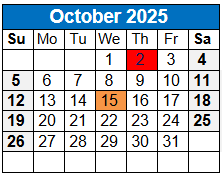


Wednesday, 9/3/25 – First Day of School
Wednesday, 9/17/25 – Education Fun Day
Tuesday, 9/23/25 – School Closed Holiday
Thursday, 10/2/25 – School Closed/Holiday
Wednesday, 10/15/25 – Education Fun Day
Thursday, 11/6/25 1st Marking Period Ends
Monday, 11/10/25- School Closed/Holiday
Wednesday, 11/19/25 – Education Fun Day
Monday, 11/24/25 – 11/28/25 – No School/Holiday
Wednesday, 12/17/25 – Education Fun Day
Monday, 12/22/25-1/2/26 – No School/Winter Break
Wednesday, 1/21/26 – Education Fun Day
Monday, 1/19/26 – School Closed/Holiday
Wednesday, 1/29/26 – 2nd Marking Period Ends
Monday, 2/16/26 – School Closed/Holiday
Wednesday, 2/18/26 – Education Fun Day
Wednesday, 3/18/26 – Education Fun Day
Thursday, 3/26/26- End of 3rd Marking Period
Friday, 4/3/26 – 4/10/26 – School Closed/Spring Break
Wednesday, 4/15/26 – Education Fun Day
Wednesday, 5/21/26 – Education Fun Day
Monday, 5/25/26 – School Closed/Holiday
Wednesday, 6/3/26 End of 4th Marking Period
Thursday, 6/4/26 – Last Day of School
FIELD TRIPS & COMMUNITY SERVICE
At Augustine Hills School, we embrace this research to help our students learn—and create memories that will last a lifetime.


FIELD TRIPS
Field Trips are unique ways to provide a learning experience for every child, no matter what his learning style might be. Research shows that these are critical tools for creating episodic memories that enhance learning through the five senses, as well as the emotions. Our field trips are designed to enhance the community within the Augustine Hills School, and to connect what students learn in the classroom to real world experiences. We are careful to tailor each event to the interests and education of the students enrolled.
COMMUNITY SERVICE
We also feel strongly at Back to Basics about giving back to the community, so each year our students volunteer to support nonprofits in need. In past years, students have visited local animal shelters and dining halls.
EDUCATIONAL FUN DAYS
Additionally, we provide special in-house learning events, “Education Fun Days” outside of the typical 1-on-1 learning environment. Through these events, students have opportunities to hear scheduled speakers, and to interact and network to build peer relationships while collectively learning new ideas and relevant, real-world concepts and applications with their teachers in a group setting.